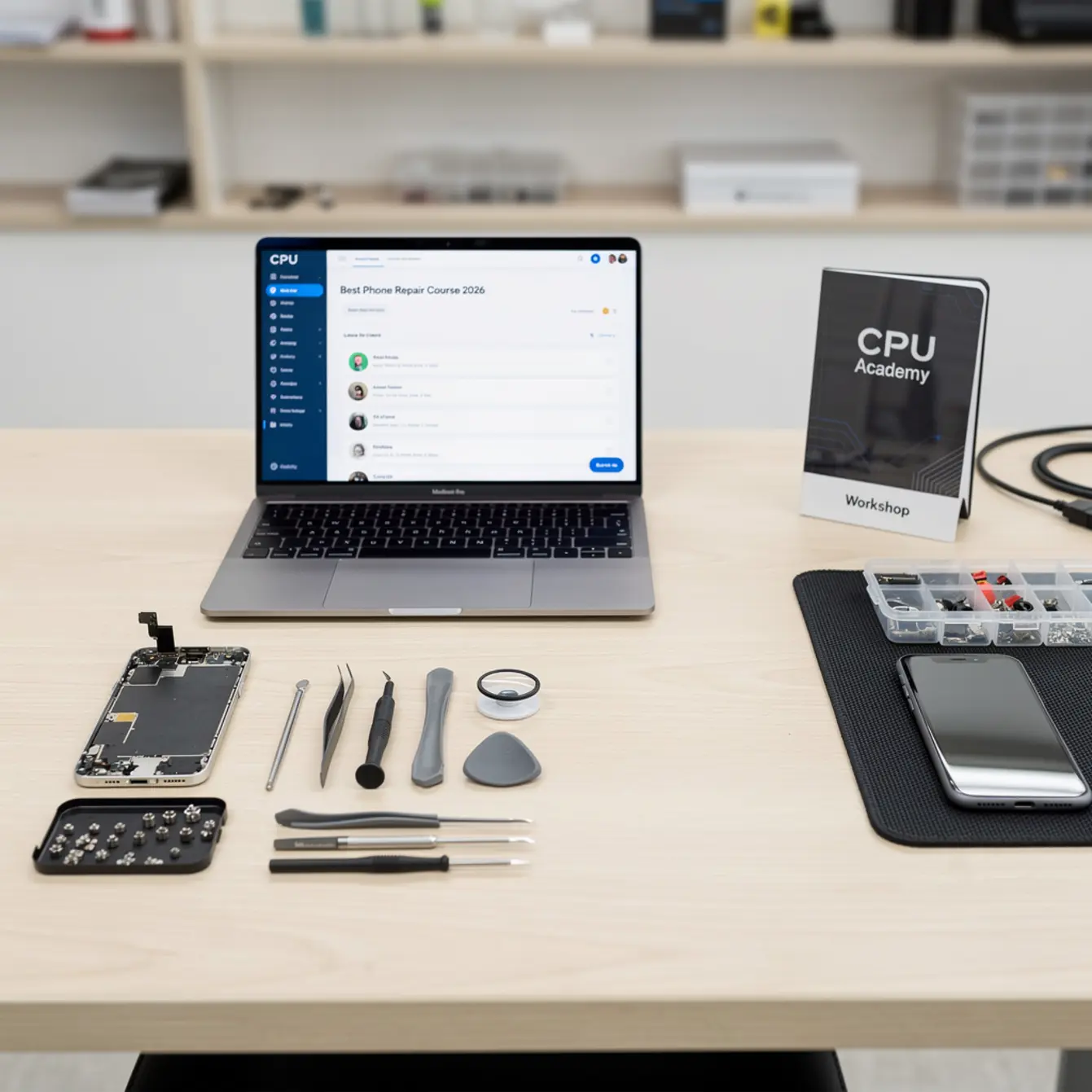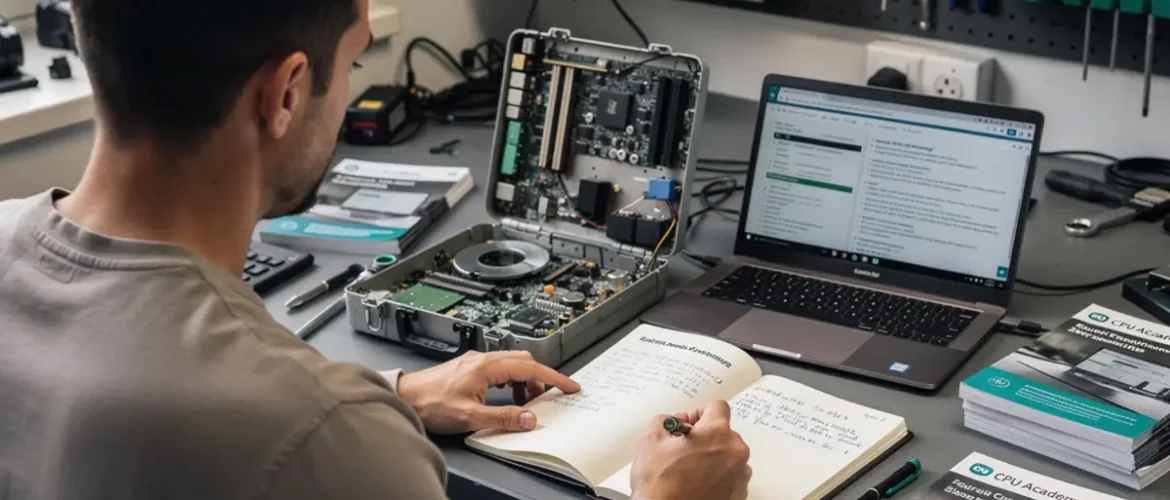
Quick answer: The best phone repair course in 2026 gives you structured, real-device practice — not just videos to watch. Beginners who want a practical path to paid work should look for a cell phone repair course that covers diagnostics, screen replacement, and schematic reading in a logical sequence. If you need guided structure and hands-on skill from day one, a dedicated online phone repair course beats scattered YouTube clips every time.
Here’s the fear nobody says out loud: you spend real money on a phone repair course, sit through hours of content, and then the first time an actual phone is on your bench, your hands hesitate. That’s not a confidence problem. That’s a course-selection problem.
Most beginners don’t pick the wrong course because they weren’t careful. They pick the wrong one because every option looks roughly the same from the outside — and nobody handed them a straight comparison before checkout.
This guide fixes that. It’s built for people searching for the best phone repair course 2026 who want a real path to first paid repairs, not another half-finished certification they’ll lose interest in by week two.
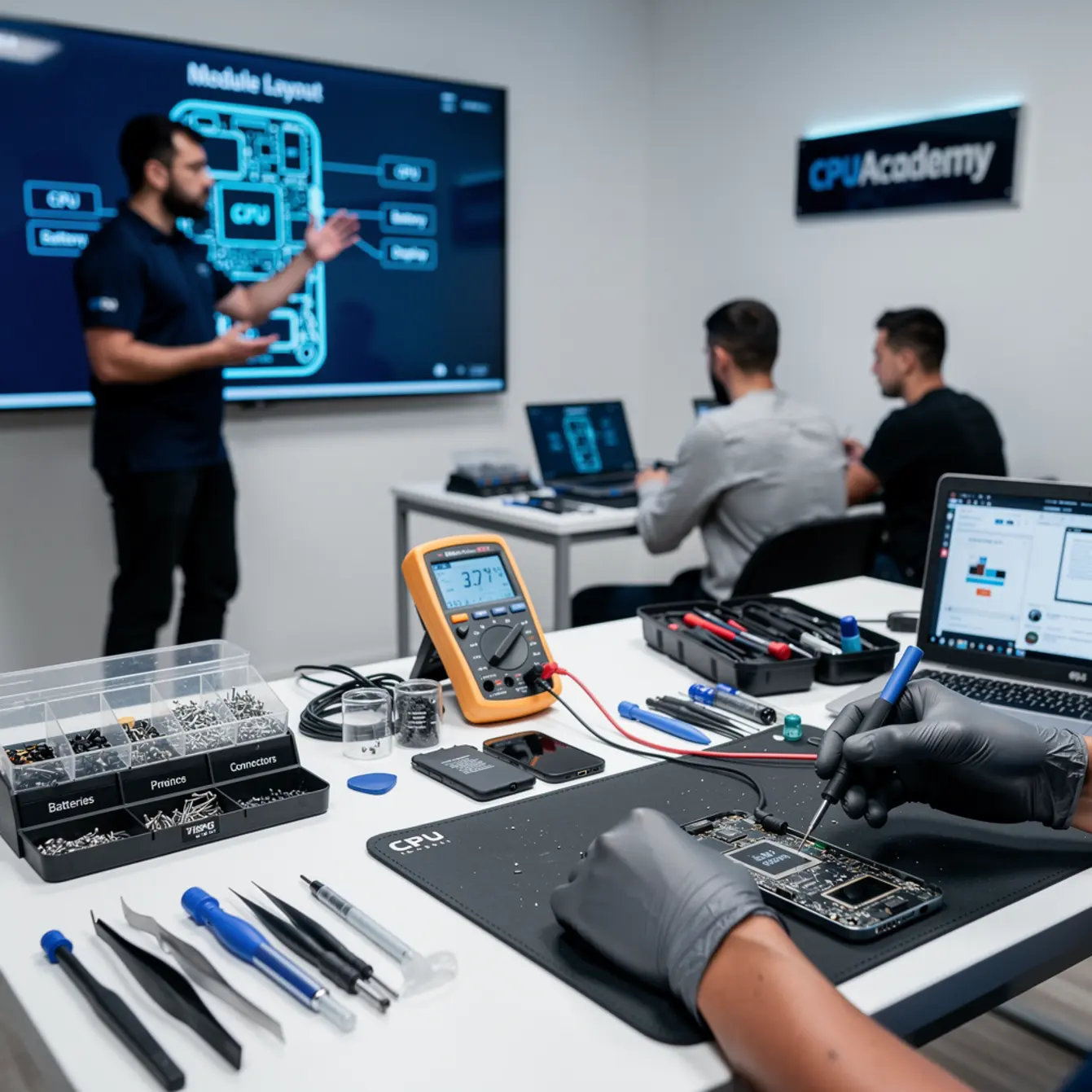
Quick Answer: Who Should Choose This Best Phone Repair Courses in 2026 (Expert-Vetted) Guide?
This guide is for beginners and early-intermediate learners in the US who want phone repair to actually pay them — side hustle, freelance work, or a full shop down the road. You’ve probably spent time on YouTube. Useful, sure. But incomplete when something doesn’t match the video.
You want one course that builds skill in a sensible order, not forty clips you have to mentally stitch together yourself.
If you’ve already got two years of bench time and you’re hunting for advanced board-level content, this comparison won’t cover that depth. You’d want something more specialized.
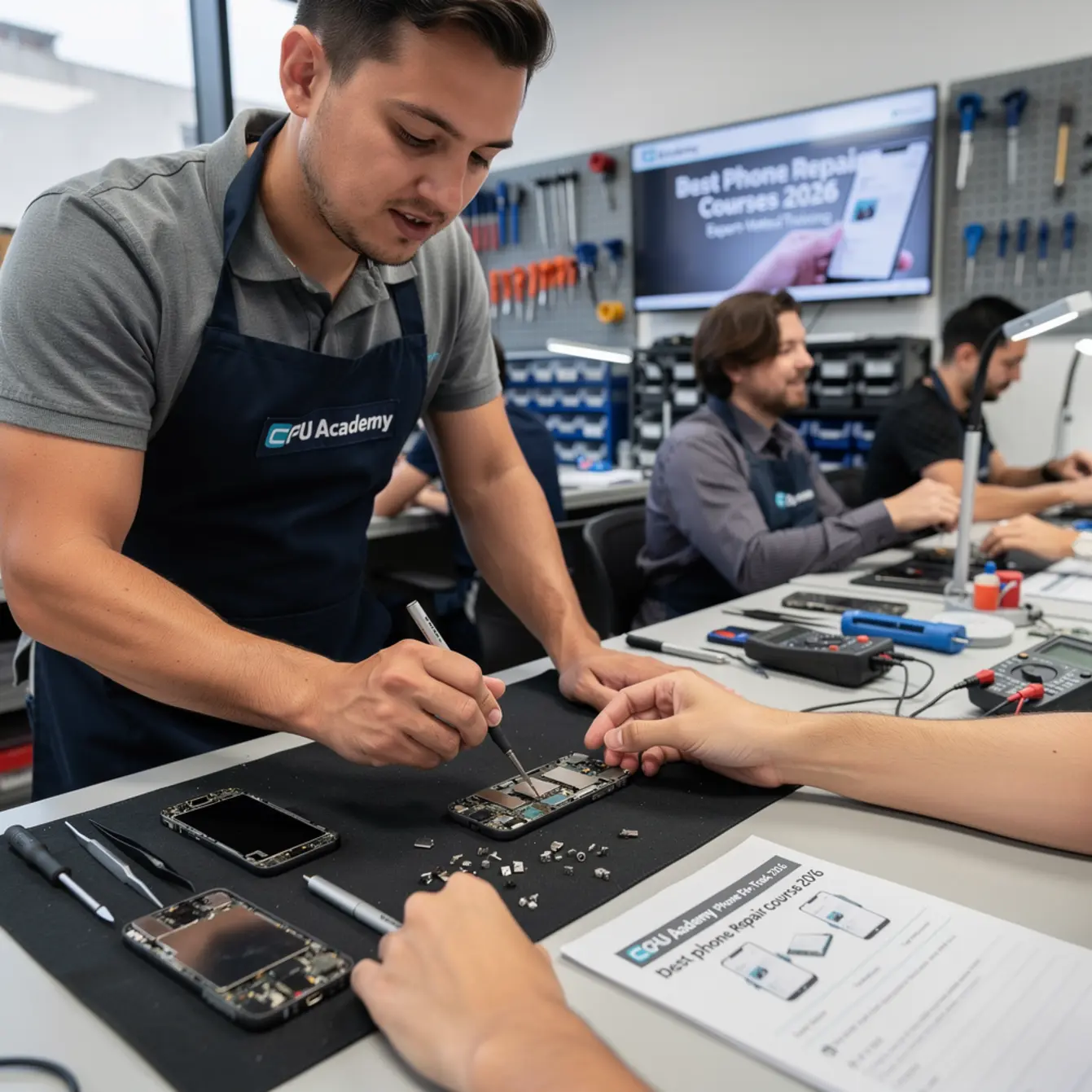
Who This Is Best For (and Who Should Skip It)
A structured phone repair course makes the most sense if a few of these land:
- You’ve never opened a smartphone professionally, or you’ve cracked a few open but don’t fully trust your own process yet
- You want to charge customers, not just fix your own devices
- You’ve hit a wall with free tutorials the moment a repair didn’t match what the video showed
- You want to understand why a phone fails, not just memorize which screw goes where
- You’d rather follow a proper lab-style path than improvise your way through 40 random clips
There’s a real difference between watching someone else do a repair on screen and following a structured lab path yourself. The first is passive. The second is where actual muscle memory and diagnostic thinking develop.
Who should hold off: If you want pure board-level microsoldering or advanced IC replacement from session one, confirm any course covers that before you pay. Most beginner-to-intermediate mobile phone repair courses open with screen replacement, battery work, and software diagnostics — which is exactly the right foundation, but it won’t skip you past fundamentals.
What to Compare Before You Buy or Enroll
Most people glance at the price and move on. That’s the decision that leads to regret. These are the criteria that actually matter — and most buyers get criterion #3 completely wrong.
| Criterion | What to Look For | Red Flag |
|---|---|---|
| Real-device practice | Exercises on actual phones, not just simulations | 100% demo-only content, no lab assignments |
| Logical sequence | Skills build on each other; doesn’t jump to advanced before basics are set | Random topic order, no clear skill progression |
| Schematic / diagnostic training ⚠️ | Teaches how to read circuit diagrams, not just swap parts | Only covers cosmetic repairs like screen swaps |
| Support access | A way to ask questions when you’re stuck mid-repair | No community, no instructor contact, no Q&A |
| Certification | Completion credential you can show clients or employers | No certificate issued, or certificate has no context behind it |
| Time-to-skill estimate | Honest estimate of practice hours to first confident repair | Claims you’ll be “job-ready in 2 hours” with no practice path |
| Refund or trial policy | Clear refund window so you’re not locked in if it’s the wrong fit | No refund option, no preview lessons |
| Job / income path | Guidance on turning skills into revenue — pricing, clients, shop setup | Course ends with skills but zero business context |
Criterion #3 — schematic and diagnostic training — is the one most buyers overlook because it sounds advanced. It isn’t. Learning to read a basic circuit diagram early means you stop guessing when a repair doesn’t go the way the tutorial showed.
It’s the difference between a technician who can actually diagnose a fault and one who just swaps parts and hopes something works.
Cost
Price matters, but a cheap cell phone repair course that skips diagnostics will cost you more in broken devices and lost jobs than a properly priced one. Look at what’s inside, not just the number on the checkout page.
Support
You will get stuck. Guaranteed. A course with no support pathway — no instructor access, no community, no Q&A — leaves you searching YouTube at 11pm with a customer’s phone in pieces on your bench. That’s a bad place to be, and it’s completely avoidable.
Real-Device Practice
Worth repeating. The first time you successfully seat a screen and feel it click into the frame correctly, something shifts in how you think about the work. You don’t get that from watching a clip. You get it from doing it — ideally inside a structured lab path that tells you exactly what you should feel and see before you even pick up a spudger.
If you want the option built for practical, real-device learning rather than scattered theory, start here: Online Phone Repair Course & Certification.
Common Mistakes Beginners Make
These aren’t edge cases. They show up constantly.
Mistake 1: Treating a phone repair course like passive TV
Watching the video once, deciding you’ve got it, then panicking when the real phone behaves differently. Repair is a physical skill. You need repetition on actual hardware. Viewing time alone doesn’t build it.
Mistake 2: Starting with the hardest device you own
The first phone on your bench shouldn’t be a six-month-old flagship. Grab a cheap used Android for $15. Practice the opening sequence three times before you touch anything inside. Confidence comes from controlled repetition, not high-stakes first attempts.
Mistake 3: Skipping schematic training because it “looks hard”
This is the single most common reason beginner technicians plateau. A phone schematic diagram isn’t a mystery document — it’s a map. Once you know how to read one, fault-finding becomes logical instead of a guessing game. CPU Academy’s dedicated phone schematic diagram course exists precisely because this skill gets skipped so often, even though it’s what separates entry-level work from everything above it.
Mistake 4: Not budgeting enough practice time
Be honest about this: most beginners need 20 to 40 hours of hands-on practice across a few weeks before repairs start feeling natural rather than just technically correct. A weekend binge-watch session isn’t the path. Plan for consistency over speed.
Mistake 5: Buying a course with no income guidance
The skill is one part of the equation. Knowing how to price a screen replacement, handle a first customer, and put together a basic service menu is what turns that skill into actual money. A mobile phone repair course that ignores this entirely leaves you technically capable but financially stuck at zero.
Real-world example: Picture a learner — call him Marcus — who buys a generic cell phone repair course online, watches all 12 hours over a weekend, then attempts a screen replacement on his sister’s phone. It goes wrong. The adhesive seals badly, the earpiece sounds muffled, and he can’t figure out why. He rewinds the video — it looks exactly like what he did. The problem is the video never covered how to check flex cable seating or why heat application matters at that specific step. That’s a sequence and support problem, not a skill problem. A structured course with a logical lab path and instructor Q&A would have flagged it before it happened.
CPU Academy Fit: When Our Course Is the Smarter Choice
CPU Academy’s phone repair course is built for the exact situation this guide has been describing. A beginner or early-intermediate learner who wants real-device practice, a skill sequence that actually builds, and a clear path to first paid work — without the chaos of piecing together a dozen free sources.
For beginners who want real-device practice and a structured path to first paid repairs, CPU Academy is the option that makes the learning curve feel safer and more usable.
The course also connects to a broader skill set. If you want to go deeper on diagnostics, the phone schematic diagram course builds directly on what you learn in the core training. And if screen work is your immediate focus, the dedicated phone screen replacement course gives you focused, step-by-step lab depth on exactly that repair.
When does CPU Academy’s course not fit? If you’re already comfortable with advanced board-level work and you need specialist microsoldering content, check the curriculum first to confirm the level matches where you actually are.
For everyone else — the person at their desk right now wondering if this investment makes sense — the straight answer is that structured cell phone repair training with real-device practice and diagnostic depth will get you to first paid jobs faster than months of free videos ever will.
Still comparing options?
See exactly what CPU Academy includes inside the course — curriculum, support details, and enrollment path — and decide with full information.
Already leaning toward enrolling but want to understand the business side from day one? The Phone Repair Course Launch Kit (30 Days) is worth looking at alongside the core training.
FAQ + Next Step
What should I look for in a phone repair course?
Look for real-device practice, a logical skill sequence that starts with basics before advancing, schematic and diagnostic training, and some form of instructor support. A completion certificate and income guidance are strong additions. Avoid courses that are purely demo-based with no hands-on lab structure.
Is a cell phone repair course worth it for a complete beginner?
Yes — if you pick the right one. A structured cell phone repair course gets you to first confident repairs faster than free tutorials because the learning path is already laid out for you. The real risk isn’t whether courses are worth it. The risk is choosing one that skips diagnostics or provides no support, which is how beginners end up stuck after a few basic jobs.
Which phone repair course is best for beginners?
The best option for a beginner starts with fundamentals — opening devices safely, screen replacement, battery swaps — and then builds toward diagnostics and schematic reading. It should include real-device practice, not just passive video. CPU Academy’s online phone repair course is designed for exactly that progression, with support and a certification included.
How long does it take to get good at phone repair?
Most beginners need 20 to 40 hours of actual hands-on practice — not just course watch time — before repairs start feeling natural. Plan for a few weeks of consistent work on real devices, starting with inexpensive used phones before moving to customer units. You won’t be polished after 10 hours, but consistent, structured effort gets you to basic paid work faster than most people expect.
Can I take a phone repair course online and still get real practice?
Yes. A good online phone repair course gives you structured lab assignments you complete on your own devices at home. The key is that the course tells you exactly what to do, what to look for, and which tools to use — so your bench practice is guided, not random. That’s what separates a real cell phone repair course online from just watching YouTube.
Do I need to know electronics before starting a mobile phone repair course?
No prior electronics background is required for a beginner-level mobile phone repair course. You should be comfortable following detailed instructions carefully and willing to practice on spare devices. Schematic reading can feel intimidating at first, but a well-structured course introduces it gradually — it’s learnable, not gated behind a technical degree.
Ready to stop researching and start building the skill?
Go to CPU Academy’s course page and see the exact curriculum, support details, and enrollment path. This is the best phone repair course 2026 option built for beginners who want practical, real-device training that leads to paid work.