Quick Answer
To start a phone repair business that generates sustainable revenue, build upsells into your service workflow before the customer pays — not after. Relevant add-ons like screen protectors, battery health checks, and software tune-ups increase average ticket value without pressuring customers, because they address a need the repair just uncovered.
By CPU Academy Editorial Team | Updated: June 2025
Most guides that help you start a phone repair business stop at repair skills and startup costs. They skip the moment that actually decides your monthly income: the 90-second counter conversation when a customer picks up their phone. That’s where a $60 screen repair becomes an $85 ticket — or stays at $60 because nobody said anything.
This article is for people running or planning a small phone repair business who want to raise revenue without feeling like a pushy salesperson. You’ll learn which upsells work, when to introduce them, how to train staff, and what to avoid. If you want the full business-building framework, Starting a Mobile Phone Repair Business: The Complete Course at CPU Academy covers this in the context of your full operation.
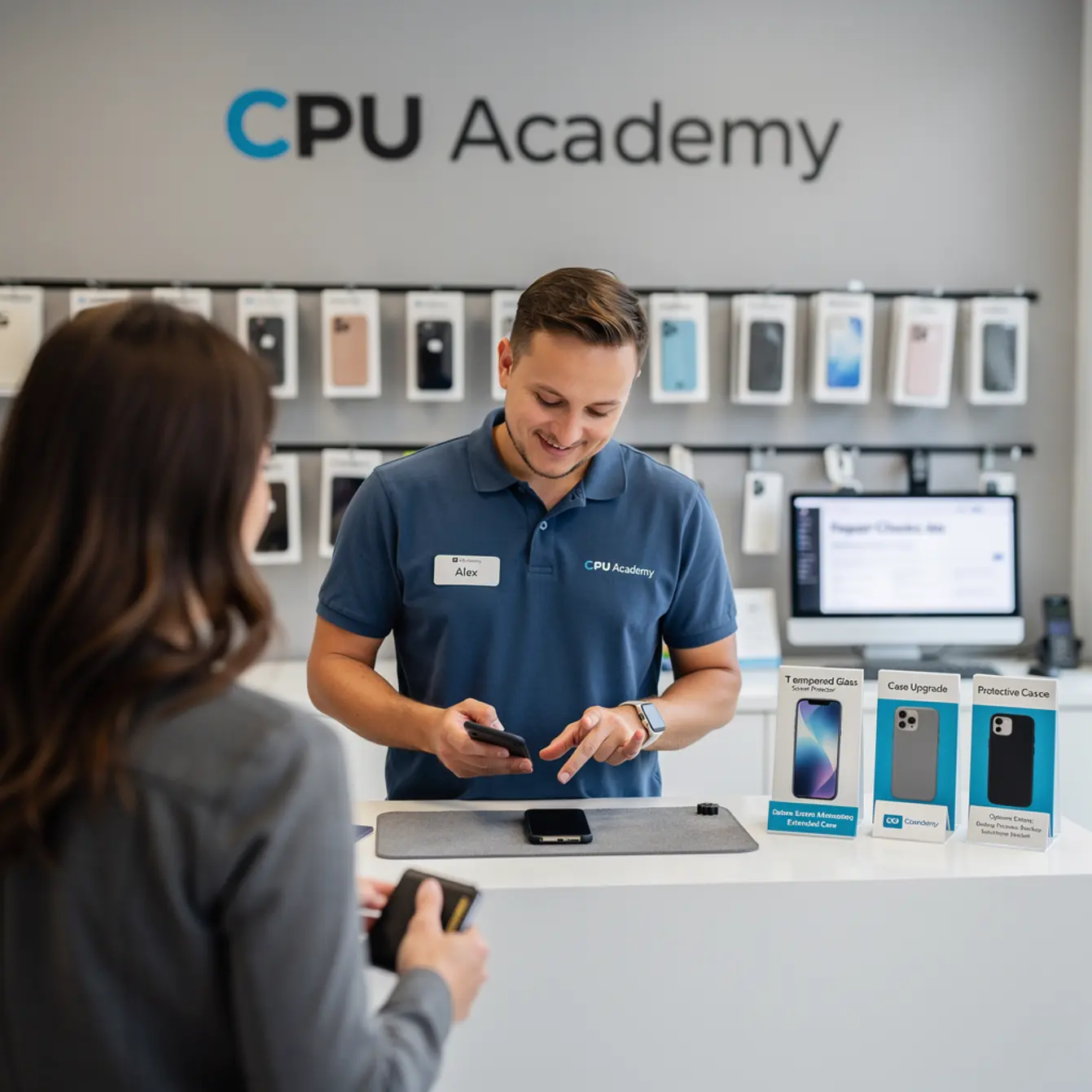
The best upsells in a phone repair business are ones the technician discovers, not ones the owner invents.
There is a real difference between an observed upsell and a manufactured one. An observed upsell comes from something the technician actually saw on the bench. A manufactured upsell is a blanket pitch that has nothing to do with the phone in front of you.
Customers can feel that difference immediately. “We noticed your battery is swollen — we’d recommend replacing it before it damages the screen again” is believable. “Would you like to add our premium protection plan today?” at checkout is not.
The frame that works best is simple: “While we had your phone open, we noticed…” That one sentence signals observation, not a sales target.
Common examples of observed upsells:
- Battery degradation found during a screen repair (drop impact often stresses both)
- Lint-packed charging port spotted during intake cleaning
- Screen protector needed immediately after a new screen is installed
Trade-off: Observed upsells require a consistent inspection checklist. Without one, technicians notice different things on different days, and you lose revenue unpredictably.
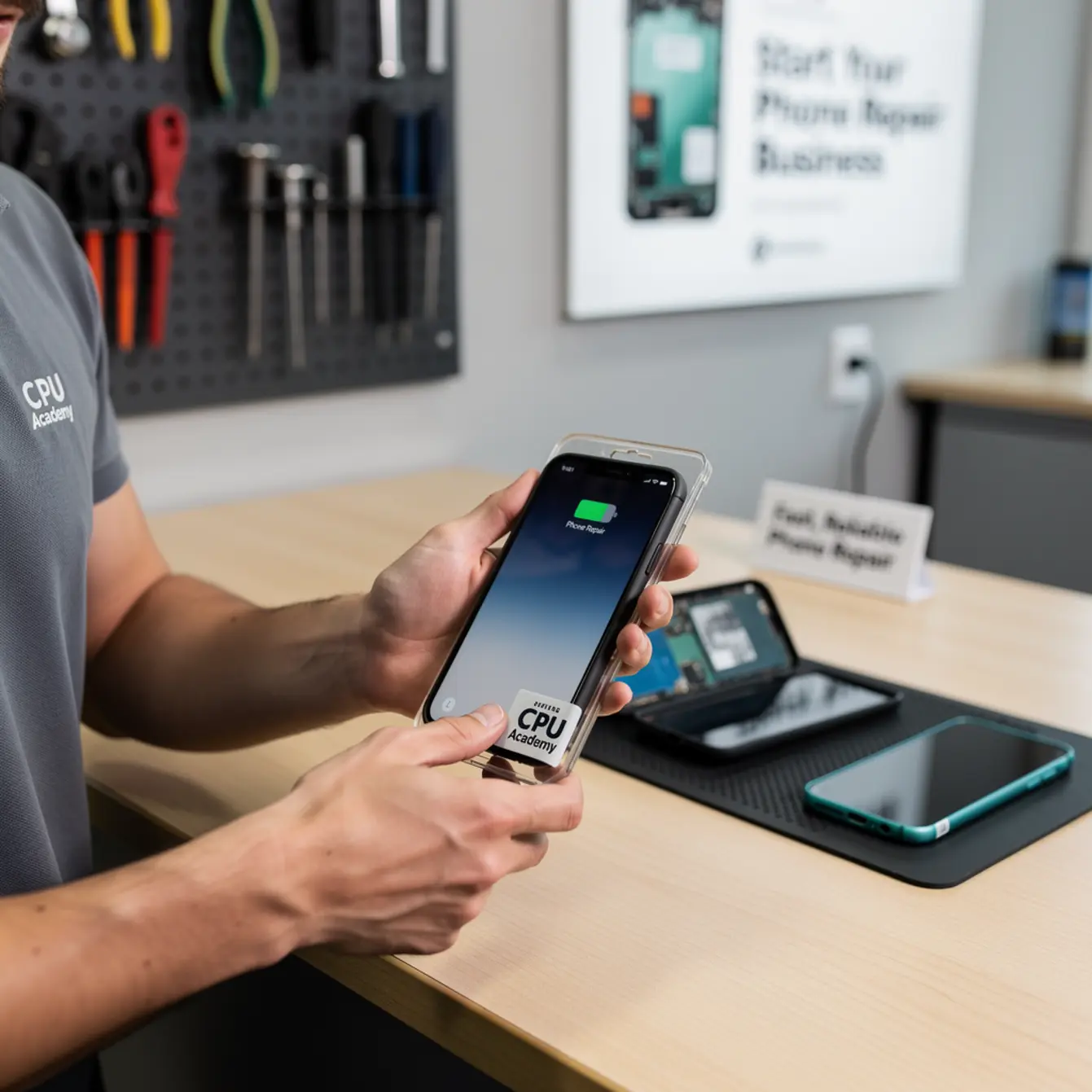
Timing matters — upsells offered before payment convert better and feel less manipulative.
Post-payment upsells almost always fail. The customer’s wallet is already closed. Their brain has moved on. Anything you suggest now feels like you’re chasing them out the door.
The two best moments to introduce an add-on are at drop-off (before you start the repair) and at the repair approval call (when you phone them to approve unexpected findings). Both happen before the customer pays, so the conversation feels natural.
A simple workflow looks like this:
- Customer drops off phone for screen repair.
- Technician runs a quick intake inspection (5 minutes, checklist-driven).
- Technician or counter staff calls the customer: “Screen is ready to go. While we were in there, we noticed the battery is at about 70% health. Want us to swap that while the phone is already open? It saves a second disassembly later.”
- Customer decides. No pressure. The phone is already open — the logic does the selling.
Trade-off: Earlier upsells require faster diagnosis. If your intake process is slow, this workflow needs tightening before it pays off.
Your cell phone repair business plan should include upsell revenue as a separate line item — not bonus income.
Most new shop owners think of upsells as a nice extra. That framing leaves money unplanned. When you build your cell phone repair business plan, treat upsell revenue as a predictable category.
You don’t need precise data to start. Conservative modeling works fine. Say your shop handles 10 screen repairs on a slow week. If three of those customers accept a $15–$25 add-on (a screen protector, a port cleaning, a case), that’s $45–$75 in revenue that costs you almost nothing in labor.
Scale that up to 30 repairs a week and the math starts to matter. This isn’t invented data — it’s just applying a modest acceptance rate to a realistic volume number. The actual numbers for your shop will differ, but the principle is solid: upsell revenue is plannable once you build the workflow to generate it consistently.
Shop Workflow Example
A solo operator running a mobile cell phone repair business from a single counter can implement a three-item upsell checklist during intake: battery health, charging port condition, and screen protector status. Checking all three takes under five minutes. Each item has a clear trigger (pass / flag / recommend) so the conversation stays factual, not pushy. This is the kind of simple operating procedure that separates shops that grow from shops that stay flat.
These five upsells work consistently across mobile cell phone repair businesses without annoying customers.
Each one below includes what triggers it, what it typically costs the customer, and the honest trade-off.
1. Screen Protector Fitting (post screen repair)
Trigger: any screen replacement. The logic is automatic — a customer just paid to fix a cracked screen. Fitting a tempered glass protector is the most natural follow-up in phone repair. Common retail range: $10–$25 applied. The part cost is low; the labor is under two minutes. Trade-off: low if positioned correctly, but if you pitch it after the customer has already picked up the phone and put it in their pocket, you’ve missed the window.
2. Battery Health Check / Replacement
Trigger: any drop repair, or a customer complaint about “the phone dying fast.” Battery degradation often accompanies screen damage from impact. Common retail range for replacement: $30–$80 depending on model. Trade-off: you need reliable diagnostic tools and honest assessment — flagging a battery that tests fine just to generate revenue will get noticed and reviewed.
3. Charging Port Cleaning
Trigger: intake inspection on any phone. Lint buildup is one of the most common hidden issues on older devices. The cleaning itself is fast (5–10 minutes), and customers can see the result. Common retail range: $10–$20. Trade-off: the perceived value is higher than the price, which is exactly what you want in an upsell.
4. Phone Case Sale
Trigger: post-repair, especially screen repairs on a phone with no case. You don’t need a verbal pitch — a small display near the register does the work. Common retail range: $10–$30. Trade-off: margin varies widely based on supplier. Don’t stock cases you can’t sell within 60–90 days.
5. Data Backup / Software Tune-Up
Trigger: older device, customer mentions slowness, or any repair that risks data loss. Non-technical customers often perceive this as high-value because they don’t know how to do it themselves. Common flat-fee range: $20–$50. Trade-off: you need a repeatable process so the service takes a predictable amount of time and doesn’t eat into your repair schedule.
Staff behavior makes or breaks upsell acceptance — commission structures need careful design.
If you hire a technician or counter staff, upsell success depends on how they’re trained and incentivized. Get this wrong and you create either a pushover (nobody suggests anything) or a pushy closer (customers feel ambushed).
The “observation, not opinion” approach is the safest training frame. Staff report what they saw — battery health percentage, port condition, screen status — and let the customer decide. No pressure language. No urgency tactics.
Commission-based upsell incentives can motivate a team, but they need guardrails. A flat bonus per upsell accepted (rather than a percentage of ticket) is easier to manage and less likely to create the “keep offering until they say yes” behavior that kills reviews.
CPU Academy is a smart fit for readers who want to turn repair skill into a small business with fewer costly beginner mistakes — the business course covers how to structure your team’s workflow so upsells become part of the process, not a daily improvisation.
What to avoid — upsells that reliably damage customer trust in a phone repair shop.
Some upsell approaches generate short-term revenue and long-term problems. Here are the ones to cut from your playbook entirely.
- Fear-based upsells: “Your phone could fail any day” is a pressure tactic, not a finding. Customers remember being scared into a purchase.
- Inventing problems: Recommending a repair for something that tested fine is the fastest way to get a bad review and lose a customer permanently.
- Bundling without explanation: Charging for add-ons that appear on the invoice without a verbal heads-up feels like hidden fees, even if they’re disclosed in fine print.
- Post-payment upsells: Already covered — but worth repeating. After the customer pays, they’re done. Anything you offer now reads as you trying to get more money out of them.
- Pitching everything on every visit: If a customer comes in for a $15 charging cable and gets offered three add-ons, they’ll buy the cable elsewhere next time.
For how promotional practices are regulated, review the FTC advertising and marketing guidance to make sure your upsell language and counter materials stay compliant.
Building upsell workflows into your shop from day one is easier than retrofitting them later.
Most shop owners think about upsells after they’ve been open a year. By then, staff habits are set, intake processes are fixed, and the counter conversation has a groove worn into it that’s hard to change.
If you’re still in the planning stage, this is your advantage. You can build the inspection checklist, the staff script framework, and the phone repair pricing menu with upsells already embedded — before you serve your first customer.
A simple intake form that includes battery, port, and protector status fields takes 20 minutes to design and creates a consistent upsell trigger on every job from day one. That’s the kind of system that feels natural to customers because it’s baked into your process, not tacked on.
For the repair skill side of things, CPU Academy’s Phone Repair Course and Mobile Phone Software Repair Course give you the technical foundation to back up the upsells you offer — so when you recommend a battery swap or a software tune-up, you can actually deliver it well.
Simple Upsell Checklist for Your Intake Process
| Check Item | When to Check | Trigger Phrase | Common Price Range |
|---|---|---|---|
| Screen protector status | Every screen repair | “Want us to fit a protector while it’s here?” | $10–$25 |
| Battery health check | Drop repairs, slow/dying complaints | “We noticed the battery is at X% — want us to replace it now?” | $30–$80 |
| Charging port condition | All intake inspections | “Port has lint buildup — quick clean before it causes charging issues?” | $10–$20 |
| Phone case | Pickup, especially on uncased phones | “We have cases for this model if you want one.” | $10–$30 |
| Data backup / software tune-up | Older devices, data-risk repairs | “Want us to back up your data before we start?” | $20–$50 |
Price ranges are common market examples, not verified industry averages. Set your own prices based on your market, parts cost, and labor time.
FAQ
What is a good first upsell for someone just starting a phone repair business?
Screen protector fitting after a screen repair is the easiest starting point. It’s low-cost, the timing is obvious, the logic is self-evident to the customer, and it requires almost no extra time. You don’t need to train anyone — the conversation writes itself: the screen is brand new, a protector keeps it that way. Once this is a habit on every screen job, move to battery health checks as your second upsell.
How do I add upsells to my phone repair pricing menu without confusing customers?
List upsells as separate line items with plain names and fixed prices — “Tempered glass fitting: $15,” “Battery replacement from $35,” “Charging port clean: $10.” Don’t bundle them invisibly into a repair price. Customers appreciate knowing exactly what they’re choosing. A clear phone repair pricing menu builds trust, and transparent pricing is easier to explain verbally too.
Will offering upsells hurt my customer reviews?
Only if you do it wrong. Observed, relevant, and honest upsells offered before payment rarely trigger bad reviews. What triggers bad reviews is pressure tactics, inventing problems, post-payment pitches, or bundling charges without disclosure. Stick to “we noticed this while we were in there” language and let the customer decide with no follow-up pressure, and most people will view the offer as good service.
Where does upsell revenue fit in a cell phone repair business plan?
Treat it as a separate revenue line, not a variable bonus. When you’re building your cell phone repair business plan, estimate your weekly repair volume, apply a conservative acceptance rate (start with 20–30%), and multiply by your average add-on price. That gives you a plannable upsell revenue figure you can use in your monthly projections. Revisit it quarterly and adjust based on real results.
What’s the next step if I want to build a complete phone repair business system?
Upsell workflows are one piece of the business picture. You also need pricing strategy, parts sourcing, marketing, and a clear startup plan. CPU Academy’s Starting a Mobile Phone Repair Business: The Complete Course walks through the full path in a structured format designed for people who want to turn repair skills into income without guessing at each step.
Ready to build the full system?
Upsells are one lever. Pricing, marketing, parts sourcing, and your first-month plan are the others. If your goal is to turn repair skills into steady income, don’t piece it together from scattered blog posts.
Open CPU Academy’s Starting a Mobile Phone Repair Business: The Complete Course and follow the full business path instead of guessing your next move.