
Blog
FREE: $1,000 Side Income in 90 Days — Repair Roadmap (PDF)
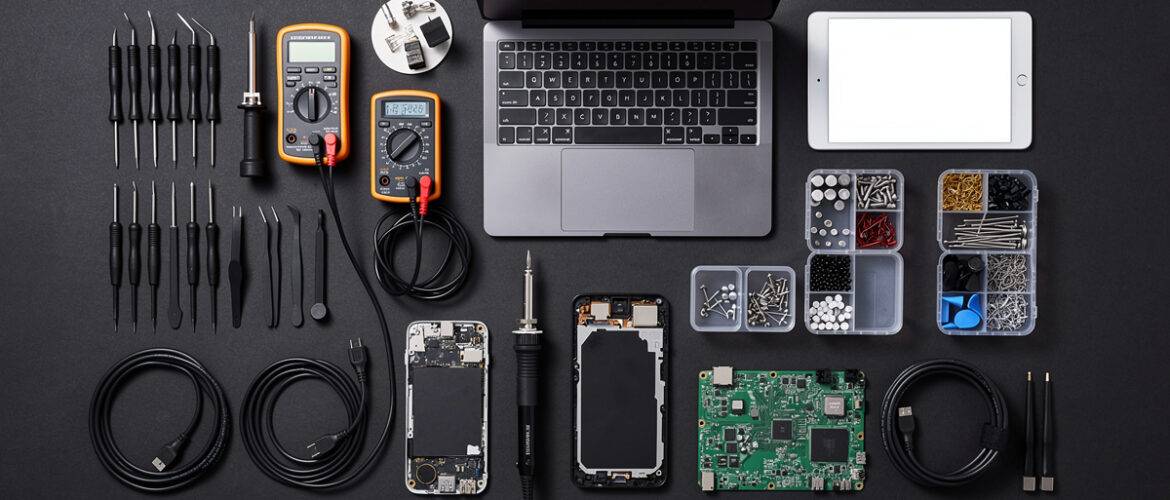
Most people who want to start a phone repair side hustle never get off the ground — not because they lack skill, but because they have no clear sequence to follow. This free 90-day roadmap gives you exactly that: a week-by-week plan built around real milestones, real earnings targets, and the exact moves that turn a beginner into a paid repair tech in three months or less.
Comment 90DAY on our Instagram post and we’ll send this straight to your DMs — no fluff, no gatekeeping, just the roadmap.
What You Get Inside
This roadmap breaks your first 90 days into three focused phases. Each phase builds on the last. Each week has a specific goal. By the end, you’ll have the skills, the tools, the first customers, and real money in your pocket.
Phase 1 — Weeks 1–4: Build Your Foundation
This phase is about getting competent and confident before you charge a single dollar. Skipping this step is the #1 reason beginners damage phones and lose customers before they even start.
- Week 1 — Learn the landscape. Study the five most common phone repairs: cracked screens, dead batteries, broken charging ports, water damage, and stuck buttons. You don’t need to fix all of them yet — you need to know what they look like, what parts they need, and roughly what they cost. Use YouTube, cpu.academy resources, and teardown videos. Goal: Name the top 3 repair types in your area and the average market price for each.
- Week 2 — Buy your starter toolkit. You do not need $500 in tools on day one. Your starter kit should include: a quality iFixit driver set or equivalent, plastic opening picks, spudgers, tweezers, a suction handle, a heat gun or iOpener, and 90% isopropyl alcohol. Total cost: $40–$80. Avoid cheap off-brand screwdrivers — stripped screws on a customer’s phone kill jobs fast.
- Week 3 — Practice on dead phones. Buy 2–3 broken iPhones or Android handsets from eBay or Facebook Marketplace for $5–$20 each. Disassemble and reassemble them. Practice screen swaps. Practice battery swaps. You’re not fixing them for sale — you’re building muscle memory. Goal: Complete 5 full disassembly/reassembly cycles without damage.
- Week 4 — Learn parts sourcing. Find two reliable parts suppliers (iFixit, Mobile Sentrix, or Injured Gadgets are good starting points). Learn the difference between OEM, aftermarket Grade A, and clone parts. Understand return policies. Set up an account and place one small test order so you know how long shipping takes. Goal: Know your go-to supplier and average delivery time before your first customer calls.
Phase 2 — Weeks 5–9: Land Your First Customers and First Dollars
This is where most beginners stall. They feel almost ready but keep waiting. Stop waiting. The reps you get on real paying jobs are worth ten times the practice runs.
- Week 5 — Set your prices. Search your city on Craigslist and Facebook for screen repair prices. Find the middle of the market, not the bottom. Starting too cheap attracts time-wasters and kills your confidence. A fair beginner rate for an iPhone screen swap: $60–$80. Battery: $35–$50. Charging port: $45–$65. Write your price list and post it somewhere visible.
- Week 6 — Tell everyone you know. Text 20 people. Post on Facebook and Instagram. Tell coworkers. Say this: “I’m doing phone repairs out of my home — screens, batteries, charging ports. Fast turnaround. Message me if you or anyone you know needs it.” You are not spamming. You are solving a real problem people already have. Goal: Book your first 1–2 jobs from your personal network.
- Week 7 — Complete your first paid repairs. Take your time. Use the right tools. If something feels wrong, stop and look it up before forcing it. After each job, ask the customer if they’d leave a Google or Facebook review. That review is worth more than the $65 you just earned. Goal: Complete 3 paid repairs with zero callbacks.
- Week 8 — Set up your Marketplace presence. Create a Facebook Marketplace listing for your repair services. Include a clear description, your price list, your turnaround time, and a phone photo showing your clean workspace. Respond to every message within one hour when possible. Speed of response is a bigger trust signal than any fancy branding at this stage.
- Week 9 — Track your numbers. Open a simple spreadsheet. Log every job: date, device, repair type, parts cost, charge to customer, profit, and time spent. This is not optional. You need to know your average profit per hour to make smart decisions going forward. By end of Week 9, you should have $200–$400 earned. If not, diagnose why and adjust.
Phase 3 — Weeks 10–13: Scale to $1,000
The foundation is set. You have skills, tools, a supplier, a price list, and early reviews. Now you press on the gas.
- Week 10 — Expand your repair menu. Add one new repair type you haven’t offered yet — back glass, speaker replacement, or water damage assessment. Take a practice phone apart to learn the process before you offer it. New skills = new revenue streams.
- Week 11 — Ask for referrals systematically. After every completed job, say this: “Hey, if you know anyone with a cracked screen or a phone issue, I’d really appreciate the referral — I’ll knock $10 off their first repair.” Referrals from happy customers are your cheapest and highest-converting marketing channel.
- Week 12 — Post content on social media. Film a 30-second before-and-after of a screen swap. Post it to Instagram Reels or TikTok. Don’t overthink it — shaky and real beats polished and never posted. These short videos build local trust fast and drive inbound messages from people who already want the service.
- Week 13 — Count your money and plan Month 4. By the end of Week 13, your goal is $1,000 in total earned revenue. That’s roughly 15–18 repairs at a $60–$70 average profit per job. If you hit it, great — now you have proof of concept. If you’re at $700, you know exactly what to do more of. Either way, you are no longer a beginner. You are a working repair technician with a real side income.
Quick Reference: Weekly Milestone Summary
- Week 1: Research top 3 repairs + market prices
- Week 2: Buy starter toolkit ($40–$80)
- Week 3: Complete 5 practice disassembly cycles
- Week 4: Set up parts supplier account
- Week 5: Write and post your price list
- Week 6: Announce to personal network — book first 2 jobs
- Week 7: Complete 3 paid repairs, collect reviews
- Week 8: Launch Facebook Marketplace listing
- Week 9: Track all jobs — hit $200–$400 milestone
- Week 10: Add one new repair skill
- Week 11: Launch referral system
- Week 12: Post one before-and-after video
- Week 13: Hit $1,000 total — plan Month 4
Want to Go Deeper?
This roadmap gets you moving fast — but the full course covers everything this plan points toward: diagnosing tricky repairs, pricing jobs profitably, handling customers professionally, and building a business that keeps growing past month three. If you’re serious about turning this side hustle into real recurring income, the next step is right here.
→ Enroll in Starting A Mobile Phone Repair Business Free Trial
📥 Download Your Free PDF
Print this roadmap and tape it above your workspace so every week’s goal is always in front of you — the technicians who hit $1,000 fastest are the ones who never lose sight of the next milestone.
Free account required · 30 seconds to sign up · Download instantly
Leave a Reply
You must be logged in to post a comment.