
Blog
FREE: CPU Academy Bundle Buyer’s Guide — What to Learn First (PDF)
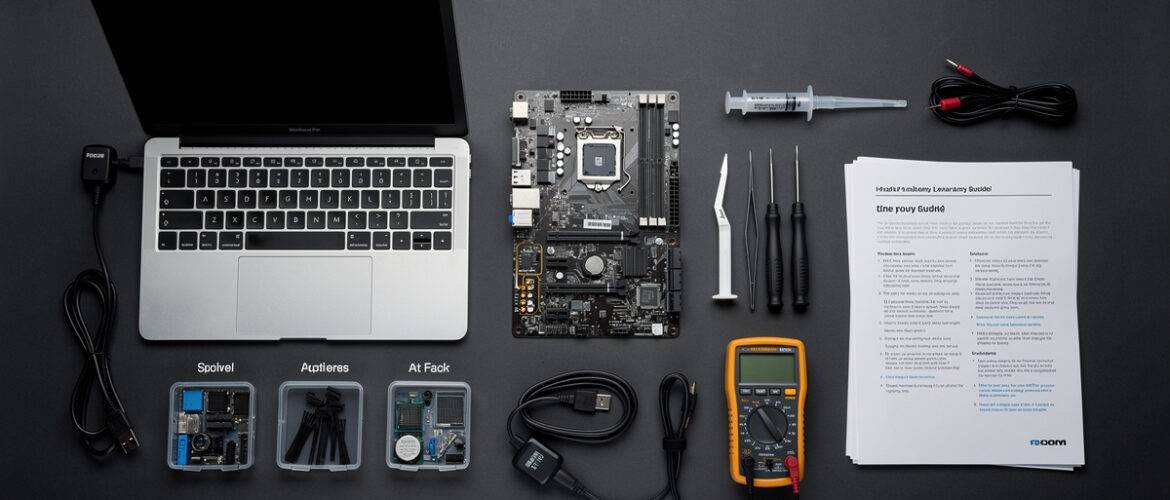
Most people who want to start a phone or laptop repair business make the same expensive mistake: they try to learn everything at once, burn out, and never actually open for business. This guide exists to cut through the noise — it gives you a clear, decision-based roadmap so you know exactly which skills to learn first, which bundles are worth your money right now, and which ones to save for later when you’re already earning.
What You Get Inside
This buyer’s guide is built around one question: What should I learn first? It’s not about which course looks coolest. It’s about sequencing your skills so you start making money as fast as possible, with the least wasted time and the least wasted cash.
Step 1 — Know Your Starting Point
Before you spend a single dollar on training, answer these three questions honestly:
- Have you repaired anything before? Even swapping a screen protector or replacing a phone case counts. It tells you you’re not afraid to touch a device.
- Do you own any tools? A basic iFixit kit, a heat gun, or even a decent set of screwdrivers puts you ahead of someone starting from zero.
- Do you have a target customer in mind? Friends and family? Local community? Walk-in shop? Online mail-in? Your answer changes which skills you need first.
If you answered no to all three, start with the fundamentals. If you answered yes to at least one, you may be ready to skip straight to a business-focused course.
Step 2 — The Four Skill Tiers (And Where You Belong)
Think of repair skills in four tiers. Most beginners overestimate which tier they’re in and buy the wrong training.
- Tier 1 — Screen and Battery Replacements: The bread and butter of any repair business. High demand, low complexity, fast turnaround. This is where 80% of your early income comes from. Learn this first.
- Tier 2 — Charging Ports, Speakers, and Cameras: Slightly more involved but still very learnable in your first 90 days. Add these once you’re confident with Tier 1.
- Tier 3 — Water Damage Assessment and Board-Level Cleaning: Intermediate work. Requires more tools and patience. Add this at the 3–6 month mark.
- Tier 4 — Micro-Soldering and Logic Board Repair: Advanced. High ticket, but steep learning curve. Save this for when you have steady income from Tiers 1 and 2.
The rule: never buy Tier 3 or 4 training until you’re actively booking Tier 1 and 2 jobs. That’s not limitation — that’s smart sequencing.
Step 3 — The Bundle Decision Criteria
Use this decision checklist when evaluating any course bundle. If a bundle doesn’t pass at least four of these five checks, skip it for now.
- Does it cover the repairs most in demand in your area? Screen and battery jobs represent the majority of repair requests in most US markets. Any bundle that doesn’t cover these thoroughly is not your first purchase.
- Does it include business setup guidance? Knowing how to fix a phone is only half the job. Knowing how to price it, market it, and collect payment is the other half. Bundles that skip business basics leave you with skills and no customers.
- Is the content format right for how you learn? Some people need video walkthroughs. Others need step-by-step written guides. Match the format to your style, or you won’t finish it.
- Does it come from instructors who have actually run a repair business? Theory from someone who’s never dealt with a real customer or a difficult repair is worth less than practical advice from someone who has.
- Does it have a clear path from beginner to earning? A good bundle isn’t just a pile of videos. It has a sequence. You should be able to look at the curriculum and say: if I follow this in order, I will be ready to take jobs by the end.
Step 4 — What to Buy First (And What to Skip)
Here’s a plain-English breakdown of how to allocate your training budget at each stage:
- If you’re brand new: Start with a course that covers phone repair fundamentals AND business setup together. Don’t split your focus. One cohesive program beats two disconnected ones.
- If you’ve done a few repairs: Skip the basics. Get a business-focused bundle that helps you systemize what you’re already doing — pricing, customer communication, sourcing parts.
- If you’re already taking jobs: Invest in a specialty skill (Tier 3 or 4) that lets you take on higher-ticket repairs your competition can’t handle.
Step 5 — The One Question That Settles It
If you’re still unsure what to learn first, ask yourself this: If someone called me tomorrow and offered to pay me for a repair, what would I feel confident doing right now? Whatever your honest answer is — that’s your current skill level. The next tier up is what you should be learning. Start there. Not two tiers up. Not at the advanced bundle because it looks impressive. The next step up from where you actually are.
Bookmark this guide. Come back to it every time you’re considering a new course or bundle. Use it as your filter, not your shopping list.
Want to Go Deeper?
This guide shows you how to choose what to learn — the full course shows you exactly how to build and run a real phone repair business from the ground up, including how to find customers, price your services, and scale beyond word of mouth.
→ Enroll in Starting A Mobile Phone Repair Business Free Trial
📥 Download Your Free PDF
Download the PDF version of this guide and keep it on your phone or printed at your desk so you can reference it every time you’re about to invest in new training.
Free account required · 30 seconds to sign up · Download instantly
Leave a Reply
You must be logged in to post a comment.